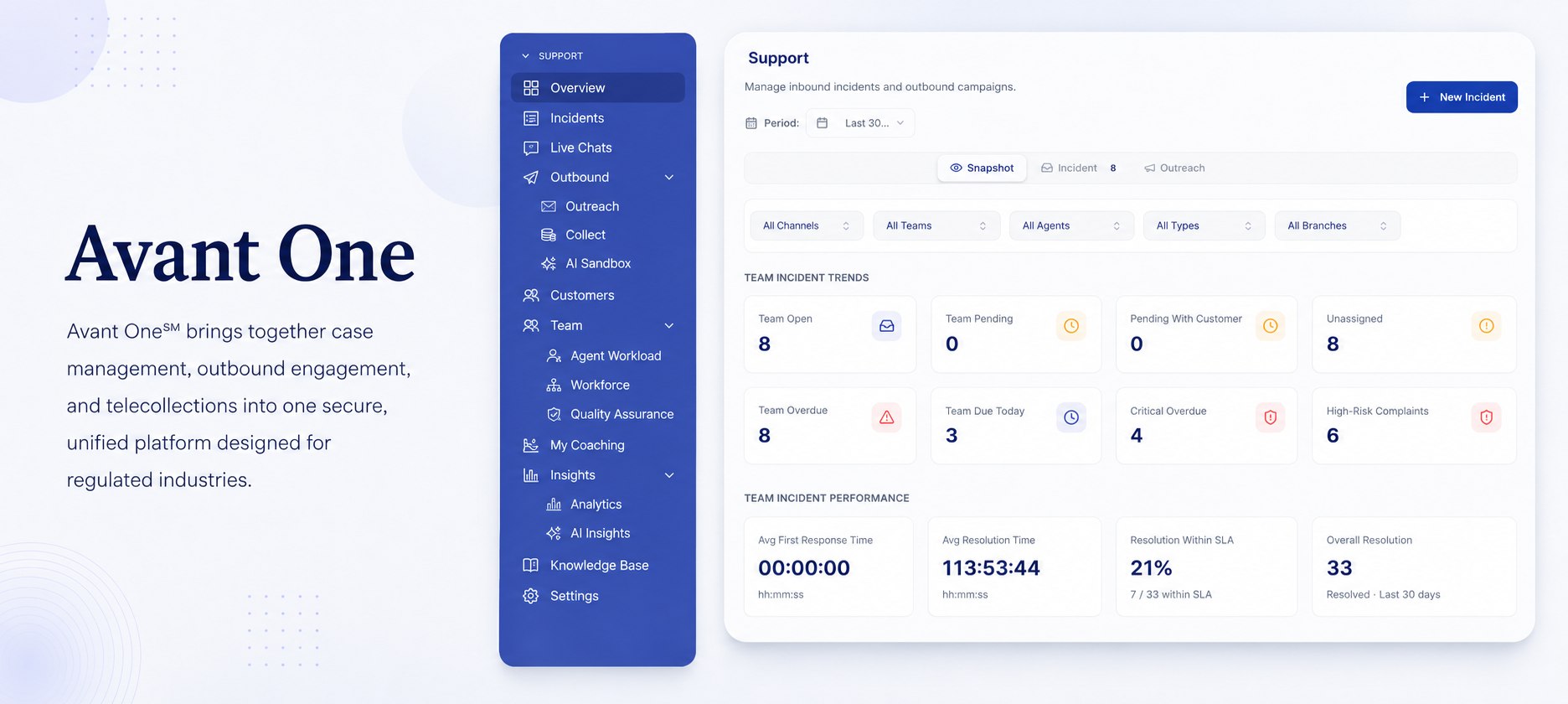
An AI CX platform is no longer optional for high-growth financial institutions; it is the fundamental infrastructure powering modern customer retention. Switching to a dedicated AI CX platform allows operations teams to turn slow, fragmented support channels into a unified engine for growth.
Legacy ticketing systems are quietly killing your customer retention through slow responses, siloed data, and agent burnout. If you are a Chief Operations Officer, Head of Customer Support, or IT Director managing banking, insurance, or HMO workflows, lingering on outdated software directly increases friction-induced churn. By making the leap to a modern experience stack, your institution can eliminate tab-switching, automate 100% of quality assurance, and resolve cases in seconds rather than days.
In this article, we will break down what separates legacy helpdesks from AI-native systems, why legacy tools fail financial services, who benefits most from an upgrade, where these platforms sit within your existing IT architecture, and how you can execute a seamless upgrade without operational downtime.
What Is an AI CX Platform vs. a Legacy Helpdesk?
To understand the shift, we must first answer what distinguishes an AI-native CX platform from traditional ticketing tools. Legacy helpdesks were built two decades ago as simple digital filing cabinets designed to organize incoming emails into sequential ticket queues.
In contrast, a unified solution like Avant One is engineered with artificial intelligence woven directly into every workflow. Instead of forcing agents to manually open a ticket, cross-reference customer policy records across three separate systems, and draft responses from scratch, an AI-native platform automates contextual retrieval in real time.
While legacy tools rely on basic chatbots bolted on top of old architectures, modern platforms leverage built-in Agent Copilots that guide agents live inside every case. This structural distinction shifts customer support from a passive cost center into a proactive, revenue-protecting asset.
Why Financial Institutions Suffer from Legacy Helpdesk Friction
The primary reason financial institutions suffer under legacy helpdesks comes down to friction—and friction is the single greatest catalyst for customer defection. In regulated industries like insurance, banking, and healthcare, loyalty is decided at the exact moment a customer experiences a problem.
- Research from leading global consulting firms like McKinsey & Company highlights that customer satisfaction in financial services drops exponentially when resolution requires more than one contact touchpoint.
- In high-volume operations, up to 73% of customer churn is friction-induced, stemming from repetitive follow-ups and delayed claim or pre-authorization approvals.
- Support agents operating without a single 360-degree view of the customer treat multi-product holders as completely separate entities, missing critical cross-sell and retention opportunities.
When a patient is waiting at a hospital desk for an HMO pre-authorization or a policyholder is submitting an urgent insurance claim, a 15-minute delay caused by manual data retrieval damages trust instantly.
Who Needs an Upgrade and Where Does Avant One Fit?
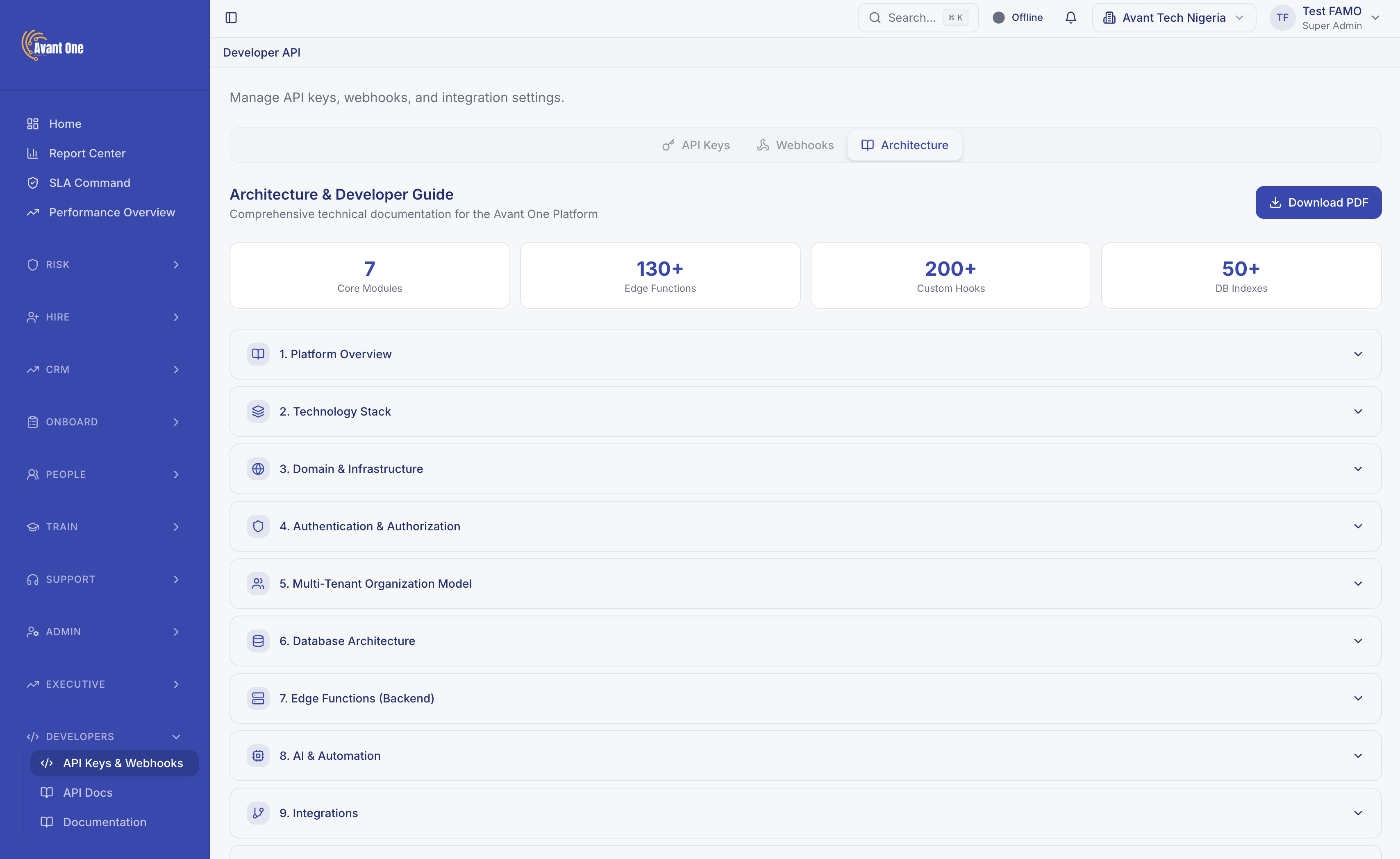
Understanding who requires this upgrade and where it deploys within your technical stack is essential for alignment between business operations and IT leadership.
Who Benefits Most?
This transformation is specifically designed for operational leaders who oversee high-volume, regulated customer touchpoints:
- Heads of Customer Experience & Support: Who need to lower First Response Times (FRT) and eliminate repetitive manual triaging.
- Chief Information Officers & IT Directors: Who require secure, compliant systems that integrate via robust APIs without replacing core databases.
- Compliance & Quality Assurance Managers: Who must move away from manual call sampling toward automated scoring.
Where Does It Sit in Your Stack?
A common concern for IT teams is system replacement risk. Avant One does not replace your core system of record; rather, it sits alongside your core banking software, underwriting databases, or CRM.
Through secure API-based integration, it acts as the intelligent orchestration layer between your backend databases and customer-facing channels including WhatsApp, Voice, Email, Web Chat, and SMS. Furthermore, for institutions operating under strict regional oversight, Avant One is built to meet rigorous security and privacy standards, including ISO 27001, SOC 2, GDPR, and NDPC compliance for Nigerian data protection obligations.
How Avant One's Three Modules — Powered by OneIQ℠ — Transform Operations
Discovering how an end-to-end platform operates in practice reveals the full power of built-in intelligence. Avant One unifies three purpose-built modules — Incident, Outreach, and Collect — into a single interface with shared customer context, each carrying its own AI-assist brand, all powered by the same governed engine: OneIQ℠.
1. Incident, with ResolveIQ℠ Assist
Incident organizes incoming customer messages across all channels into a unified timeline. ResolveIQ℠ is the AI copilot inside Incident: before an agent types a response, it analyzes the inquiry, pulls active policy details, checks benefit eligibility, drafts a suggested response, and auto-triages incoming cases. QA coaching scores cases against configured compliance rubrics at a scale manual sampling can't match.
2. Outreach, with EngageIQ℠
Why wait for a customer to complain when you can prevent the issue entirely? EngageIQ℠ is the AI layer inside Outreach: churn prediction can flag accounts showing signs of dropping off — such as an expiring credit card on a life policy — before they officially lapse, and next-best-action logic triggers a personalized follow-up sequence across WhatsApp, email, SMS, or voice at the point a customer is most likely to engage.
3. Collect, with RecoverIQ℠
Managing overdue premiums or loan installments requires precision and compliance. RecoverIQ℠ brings collections strategy and conversational AI into Collect, helping detect default risk early and guiding collections agents through structured, compliance-aware outreach sequences with recovery QA and a complete audit trail on every attempt.
Recommendations for Upgrading Your CX Infrastructure
Upgrading your customer experience architecture does not have to be a multi-year, disruptive overhaul. We recommend the following phased approach to ensure immediate return on investment:
- Pinpoint Your Highest-Friction Workflow: Identify where your support queue experiences the longest delays—whether that is HMO pre-authorizations, motor claims processing, or dispute resolution.
- Prioritize API-Native Solutions: Select software that connects directly to your core system of record without requiring custom database overhauls.
- Automate Quality Assurance First: Transition from manual 2% QA sampling to 100% automated QA scoring to ensure instant compliance across all customer interactions.
- Run a Time-Boxed Pilot: Test the platform on a specific business unit or product line to measure reductions in First Response Time before deploying across the entire enterprise.
Conclusion
Transitioning from a legacy helpdesk to an AI-powered CX platform is the fastest way for financial institutions to reduce operational costs, boost retention, and maintain strict regulatory compliance. By equipping your agents with live copilot guidance and unifying inbound support, outreach, and collections, you turn everyday customer touchpoints into long-term brand loyalty.
Ready to eliminate support bottlenecks and transform your customer experience? Book a customized demo with the Avant One team today to see our live Agent Copilot and automated QA engines in action!
What is the single biggest operational bottleneck your support team is facing right now—siloed data systems or proactive churn management? Let us know your thoughts in the comments below!